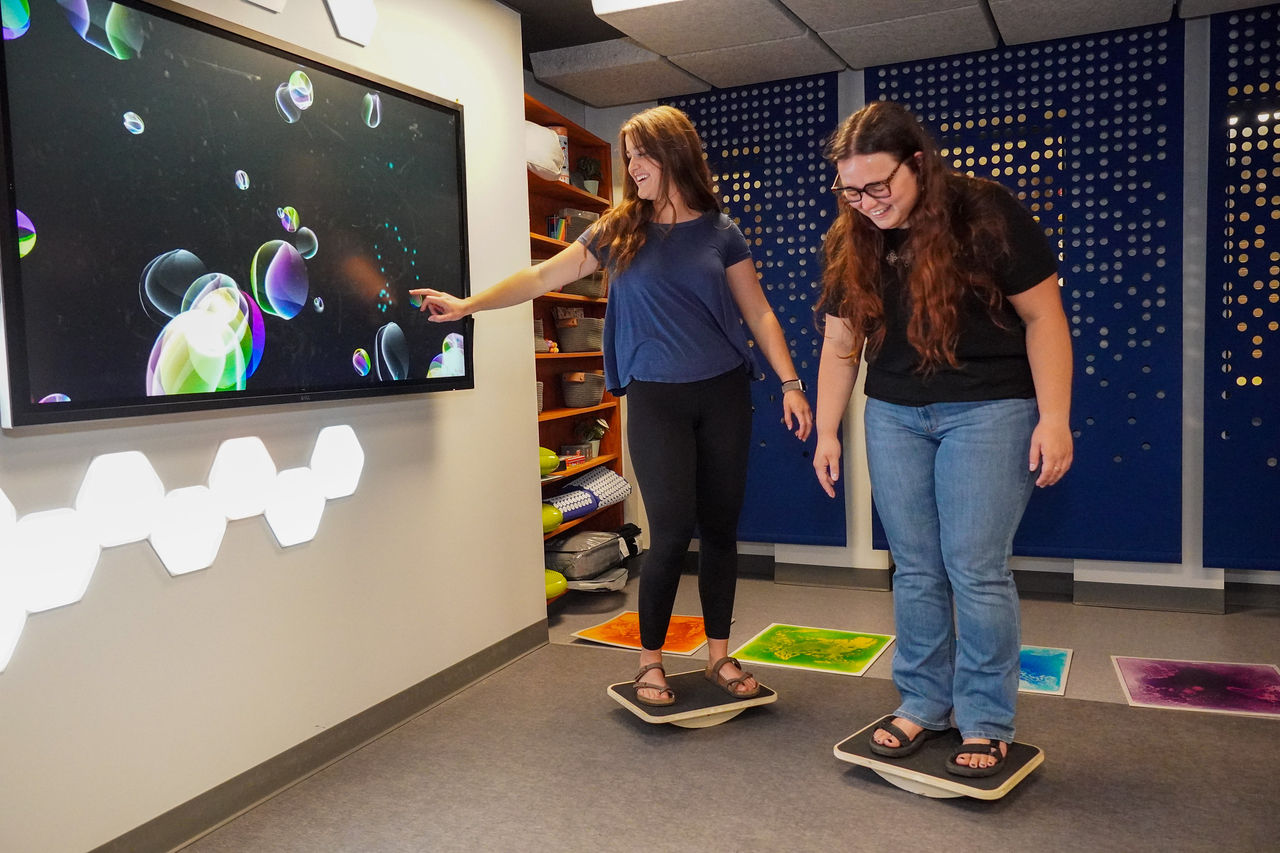
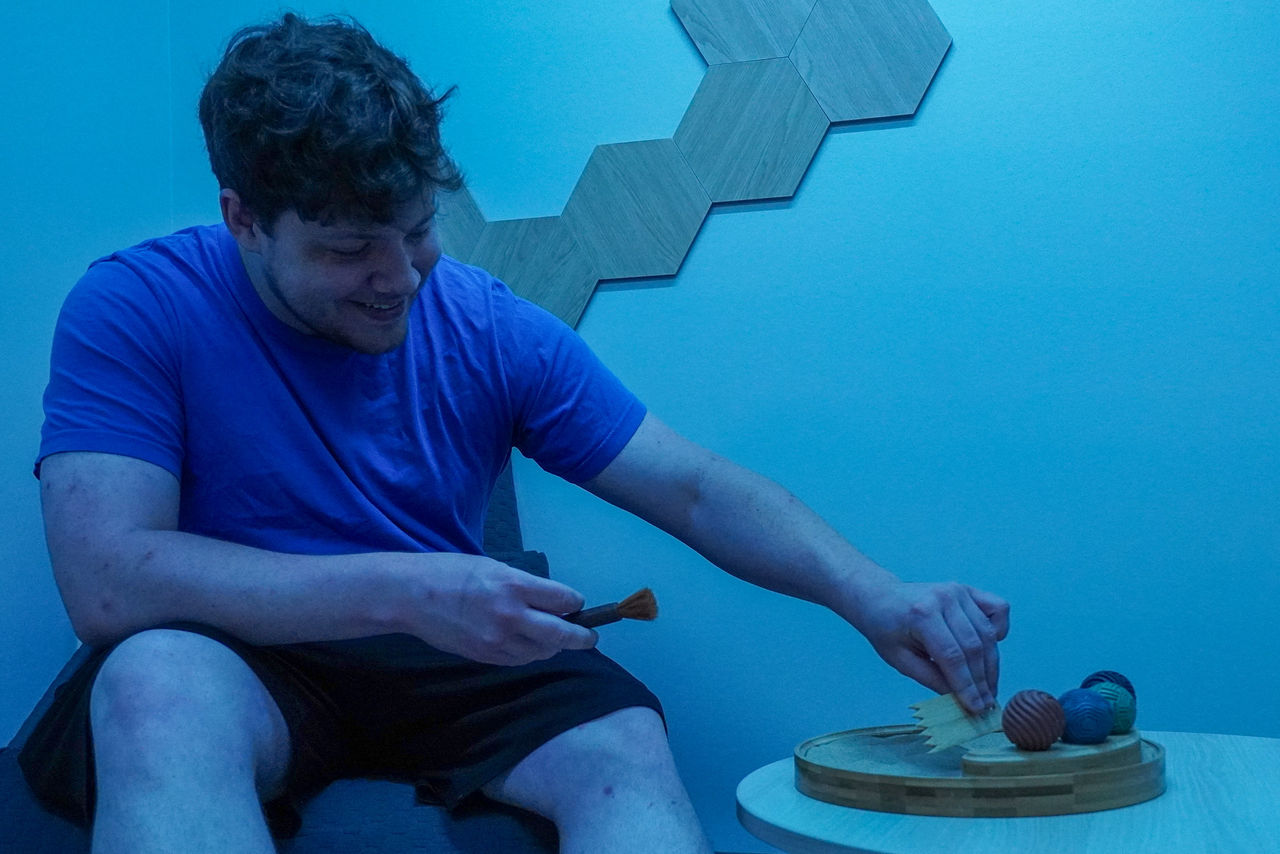
In both the sensory room and meditation space, every element has been meticulously selected to serve a specific purpose. These rooms were designed with thoughtfully chosen color schemes, with soft, soothing colors, textured walls, ceiling coverings, and curtain panels that have a calming and grounding effect, providing a sense of security and comfort.
You'll find a diverse array of seating options in these spaces. For instance, our cocoon-like chairs help reduce sensory overstimulation and anxiety. The balance balls and wobble stools encourage vestibular stimulation and provide a soothing effect on our nervous systems. Bean bags create a cozy and inviting space for relaxation, particularly beneficial for individuals seeking tactile comfort or tired college students in need of a nap.
Lighting plays a pivotal role in both spaces. Dimmable and color-changing lights offer flexibility, allowing for a calming or stimulating atmosphere based on individual needs. The nano lights on the wall, fiber optic curtain, and dimmable ceiling lights in both rooms facilitate multi-sensory integration, enhance focus, and empower the occupants.
Additionally, we have incorporated a touchscreen display that is the true centerpiece of our sensory experience. It offers a world of interactive engagement, allowing users to touch, swipe, view and listen to a variety of sensory-rich content.
Our rooms are stocked with equipment designed to cater to a variety of needs. Weighted blankets and lap pads offer deep pressure input, while the textured mats provide a comfortable surface for tactile exploration. Play-Doh, putty, and sand allow for squeezing, stretching, and molding, offering tactile and proprioceptive input. And of course, fidget toys and sensory squishies offer tactile and visual stimulation, aiding in focus and self-regulation.
The overarching goal of these spaces is to foster well-being, relaxation, and sensory enrichment. These are fundamental needs that can benefit people of all ages, abilities, and backgrounds.